
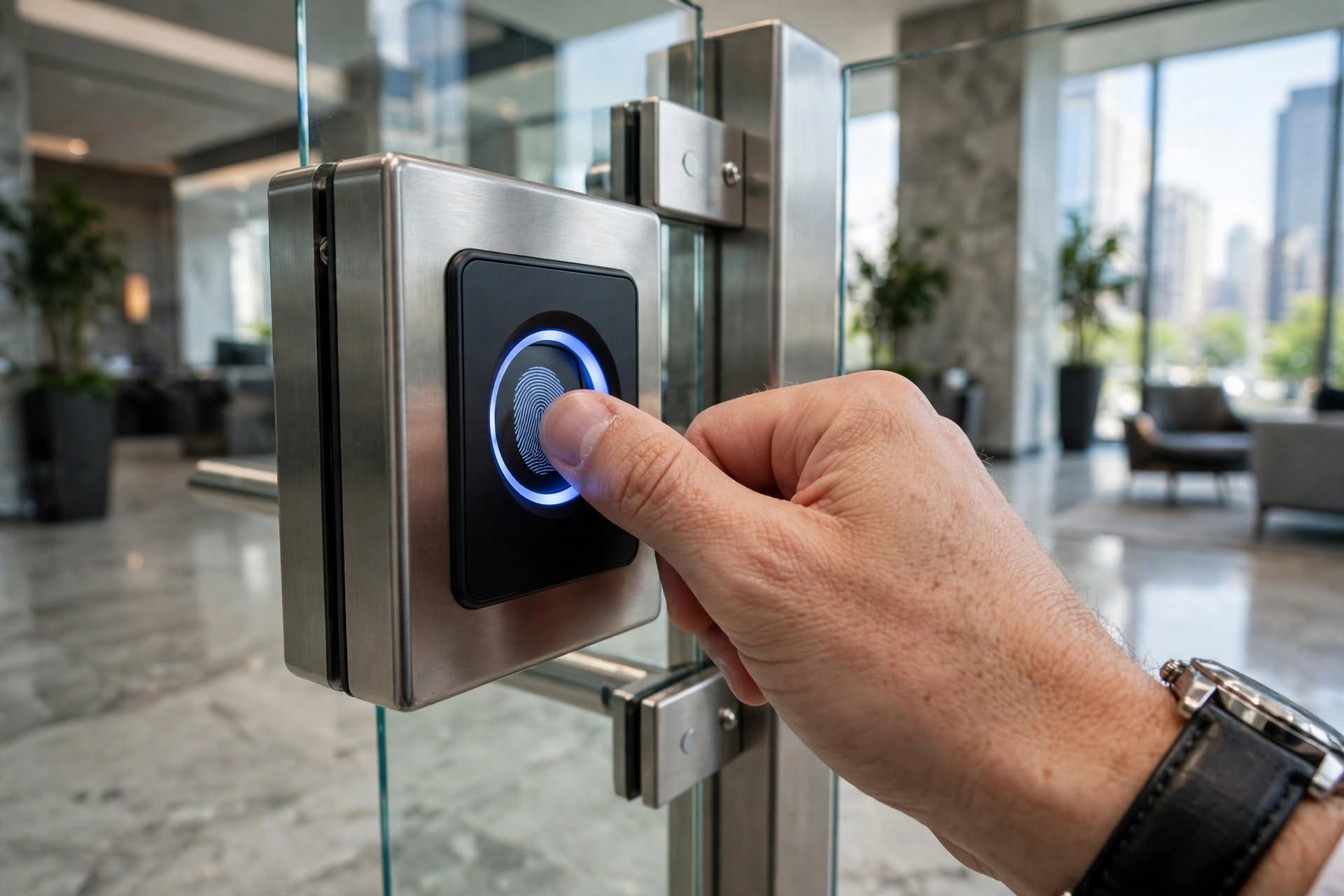
Thousands of employees, tenants, visitors, and contractors may pass through a busy Chicago office tower every day. Managing that traffic with traditional access cards can create ongoing security challenges. Cards get lost, employees share credentials, and unauthorized visitors may follow someone through a secured entrance.
Biometric access control gives commercial property managers another way to verify identities. Using technologies such as fingerprint mapping and facial recognition, these systems can help control access to building entrances, tenant floors, executive offices, and other restricted areas.
What Is Biometric Access Control for Office Buildings?
Biometric access control verifies a person’s identity using unique physical characteristics, such as fingerprints or facial features, before granting access to a secured area.
For large office towers, this technology can supplement traditional access cards or provide an additional authentication step at selected entrances. The right configuration depends on building size, tenant requirements, traffic volume, and security priorities.
Reduce Lost Cards and Shared Credentials
Managing thousands of employee access cards can become an administrative headache. Lost badges need replacement, former employees may retain old credentials, and shared cards can make it harder to identify who actually entered a building.
Biometric verification connects access to an enrolled individual rather than relying only on a physical card. This can improve accountability and reduce problems associated with borrowed or shared credentials.
Prevent Unauthorized Entry and Tailgating
Tailgating happens when an unauthorized person enters a secured area by following someone with legitimate access. It is a common concern in busy office lobbies, elevator areas, and employee entrances.
Biometric readers, when combined with properly configured access control hardware and entry procedures, can help strengthen identity verification. They are particularly useful at locations where building management needs tighter control over who enters.
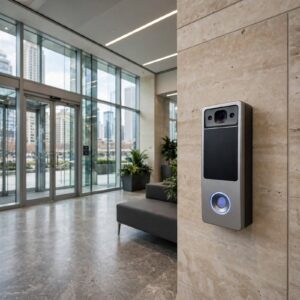
Secure Executive Offices and Restricted Floors
Not everyone in an office tower needs access to every floor or department. Executive suites, financial offices, server rooms, telecommunications areas, and confidential business spaces may require additional protection.
Biometric authentication can provide an additional security layer at these sensitive access points. Building managers can also consider combining biometric verification with existing access control systems to create different access permissions for employees, tenants, contractors, and authorized visitors.
Manage Tenant and Visitor Access More Effectively
Class-A office towers often house multiple businesses with different operating hours, employee groups, and access requirements. Property managers need a practical way to manage these permissions without creating unnecessary delays at building entrances.
An integrated security approach can connect biometric readers with compatible access control, visitor management, and video surveillance systems. This helps authorized personnel maintain better oversight of building activity.
Sentry Security provides biometric security solutions with options that can include fingerprint mapping, facial recognition, remote security control, and integration with compatible security hardware.
Consider Privacy Before Implementing Biometrics
Biometric information requires careful handling. Before introducing fingerprint or facial recognition technology, office building owners should evaluate applicable privacy requirements, including Illinois biometric privacy laws, data storage practices, consent procedures, and retention policies.
The system should also include appropriate access permissions, administrative controls, and procedures for handling biometric information. Consult qualified legal and privacy professionals when establishing these policies.
Biometric Security for Chicago Commercial Properties
From downtown Chicago office towers to commercial properties in Naperville, Schaumburg, Aurora, and Oak Brook, large buildings need security solutions that match their daily operations.
Sentry Security helps businesses evaluate their access control requirements and explore biometric technology that fits their facilities. Whether you need to secure employee entrances, restricted floors, or sensitive business areas, the right system starts with a proper assessment.
Looking to improve access control in your commercial building? Request a security assessment from Sentry Security.
Frequently Asked Questions
Can biometric access control replace employee access cards?
It can replace cards at selected access points, but many office buildings use a combination of biometrics, cards, and PINs. The best setup depends on building traffic, security requirements, and tenant needs.
Which biometric technology works best for office towers?
Fingerprint and facial recognition systems are common options. The right choice depends on entry volume, environmental conditions, privacy requirements, and the level of security needed.
Can biometric systems integrate with existing building security?
Yes. Compatible biometric readers can be integrated with existing access control and other security hardware, depending on the system architecture and equipment.