
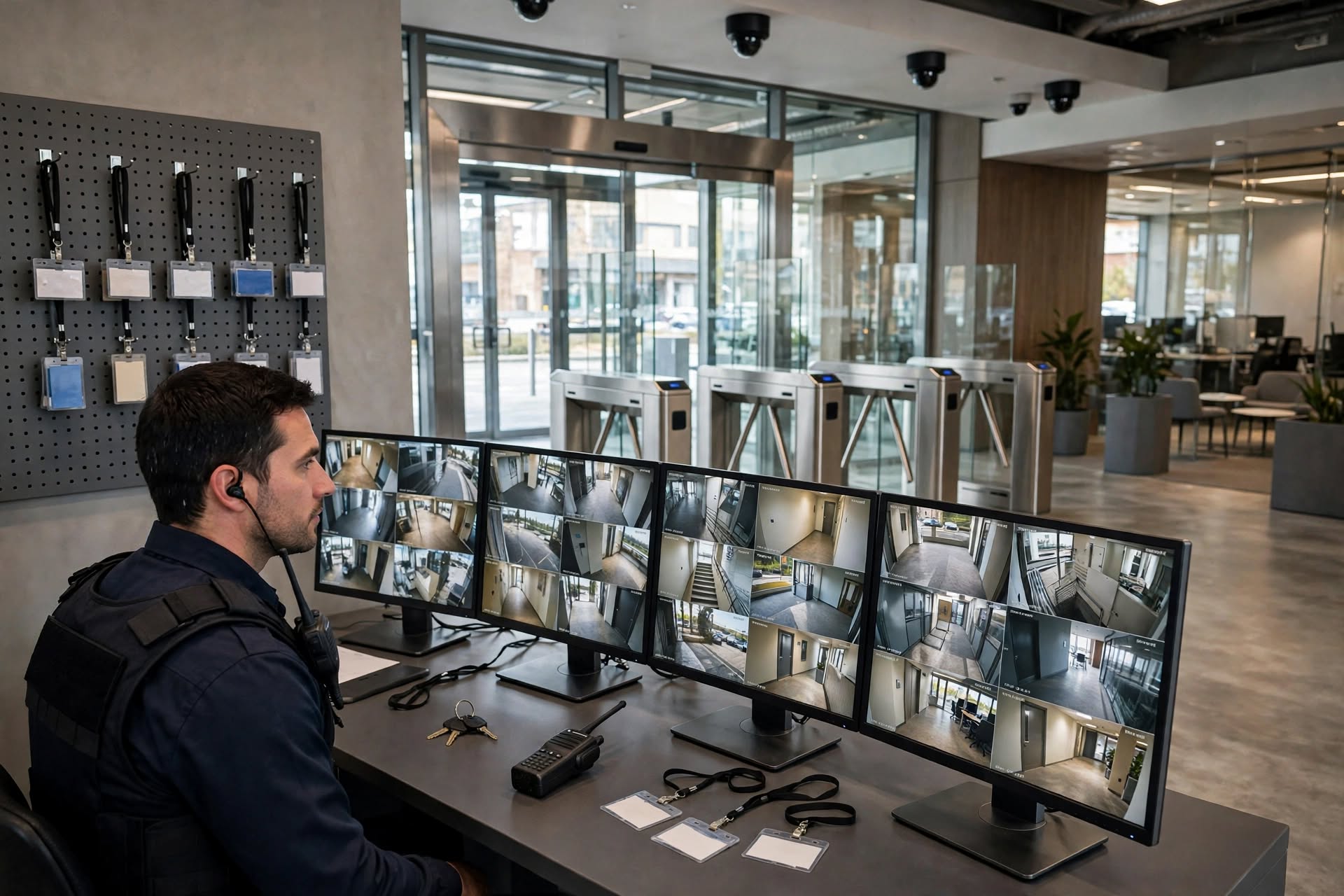
A few employees have building keys, visitors enter through the same doors as staff, and nobody is quite sure who is responsible for security after hours. Sound familiar? Without clear procedures, even a business with security equipment can have unnecessary vulnerabilities.
A physical security policy helps businesses establish consistent procedures for protecting employees, visitors, facilities, and valuable assets. It should explain who can access the property, how security incidents are handled, and which technologies support daily operations.
1. Define Who Can Access Your Business
Start by identifying who needs access to your building and which areas they should be able to enter. Employees, contractors, vendors, and visitors may all require different access permissions.
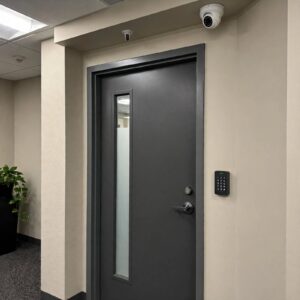
Commercial access control systems help businesses manage credentials, restrict sensitive areas, and review entry activity. Permissions can also be updated when employees change roles or leave the organization.
Explore Sentry Security’s access and door entry solutions to learn how controlled access can support your security procedures.
2. Establish Visitor and Contractor Procedures
Do you know who is entering your building throughout the day? Businesses should establish clear procedures for visitor registration, contractor access, temporary credentials, and restricted areas.
A visitor management system can help organize visitor activity and improve visibility into who enters a facility and when.
847.353.7200Email Us : service@sentrysecurity.com – sales@sentrysecurity.com
3. Include Surveillance and After-Hours Protection
Your security policy should address what happens when the building is unoccupied. Identify important areas that need video coverage, intrusion detection, and monitoring.
Commercial video surveillance can provide visibility into building activity, while intrusion detection and monitoring can help identify unauthorized activity and support an appropriate response.
Learn more about commercial video surveillance and 24/7 security monitoring.
4. Establish Emergency Response Procedures
Employees should understand whom to contact, how to report an incident, and what steps to follow during a security emergency. Procedures should address unauthorized entry, alarms, fire events, and other situations relevant to the facility.
Businesses should also review their emergency communication and life-safety requirements regularly.
5. Review and Update the Policy Regularly
A security policy should evolve as your business changes. New employees, additional locations, building renovations, and changing operational requirements can all affect security needs.
Sentry Security provides customized security system design and engineering, integration, monitoring, and maintenance services. Its team can evaluate existing infrastructure and help businesses identify practical improvements.
Build a More Organized Business Security Strategy
A clear physical security policy gives employees and management a consistent approach to protecting people, property, and daily operations. Combining practical procedures with the right security technology can make those policies easier to implement and manage.
Contact Sentry Security to discuss your facility’s security requirements and explore a customized solution.
Frequently Asked Questions
What should a business physical security policy include?
It should cover employee access, visitor procedures, restricted areas, surveillance, after-hours protection, incident reporting, and emergency response.
Who is responsible for maintaining a business security policy?
Responsibility typically involves business leadership, facility management, security personnel, and other designated employees.
Can security technology help enforce workplace security procedures?
Yes. Access control, video surveillance, intrusion detection, and monitoring can support consistent security procedures and improve visibility into building activity.
How often should businesses review their security policies?
Businesses should review policies periodically and whenever significant changes occur, such as facility expansions, staffing changes, or new security requirements.