
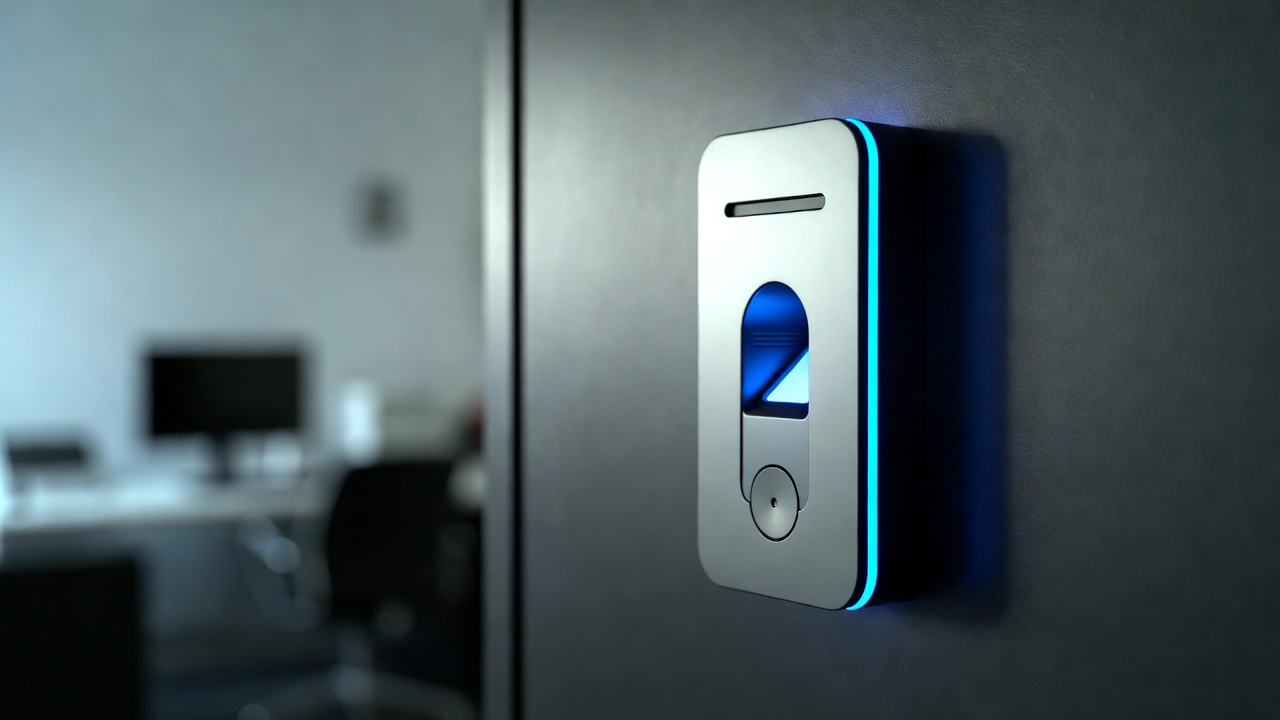
Illinois businesses must comply with BIPA when collecting, storing, and using biometric data for advanced access control systems to avoid legal and financial risks.
What Is BIPA and Why It Matters
- Obtain written consent before collecting biometric data
- Maintain a clear policy on data retention and destruction
- Implement secure storage of biometric information
- Limit collection to specific authorized purposes
Advanced Biometric Access Control Solutions
- Fingerprint Scanners – Fast, reliable
- Facial Recognition – Contactless, ideal for schools and lobbies
- Iris Scanning – High accuracy for high-security areas
- AI Multi-Factor Biometric – Combines modalities with anomaly detection
Integration with Smart Building Systems and Remote Access Management
Key Considerations for Illinois Businesses
- Legal Compliance – Verify BIPA adherence
- Data Security – Encrypt stored biometric data
- Employee Consent – Mandatory written acknowledgment
- Integration & Scalability – Multi-site readiness
- Maintenance & Updates – AI algorithms and hardware
Comparing Biometric Technologies
| Technology | Advantages | BIPA Considerations | Best Use |
|---|---|---|---|
| Fingerprint | Fast, reliable | Written consent required | Offices, healthcare, labs |
| Facial Recognition | Contactless, quick | Privacy notice & consent required | Schools, lobbies |
| Iris Scanning | High accuracy | Retention policies compliance | High-security areas |
| Multi-factor Biometric | Maximum security | Consent + secure storage | Data centers, hospitals |
Implementation Steps in Illinois
- Conduct risk assessment
- Select suitable biometric modalities
- Ensure BIPA & HIPAA compliance
- Integrate with Access and Door Entry and smart building systems
- Train staff and maintain access logs
- Evaluate ROI after 6–12 months
Implement BIPA-compliant biometric access control with Biometric Security and Smart Building Systems.
Contact 847.353.7200 or service@sentrysecurity.com.