

The honest answer is: it depends on your store. But there is a clear framework for understanding what drives cost and what is worth paying for.
The Main Cost Factors
- Store size and layout. A 1,200 square foot boutique in Elgin needs a different camera count than a 4,000 square foot multi-room showroom in Chicago. More floor space means more cameras, more sensors, and more access points to cover.
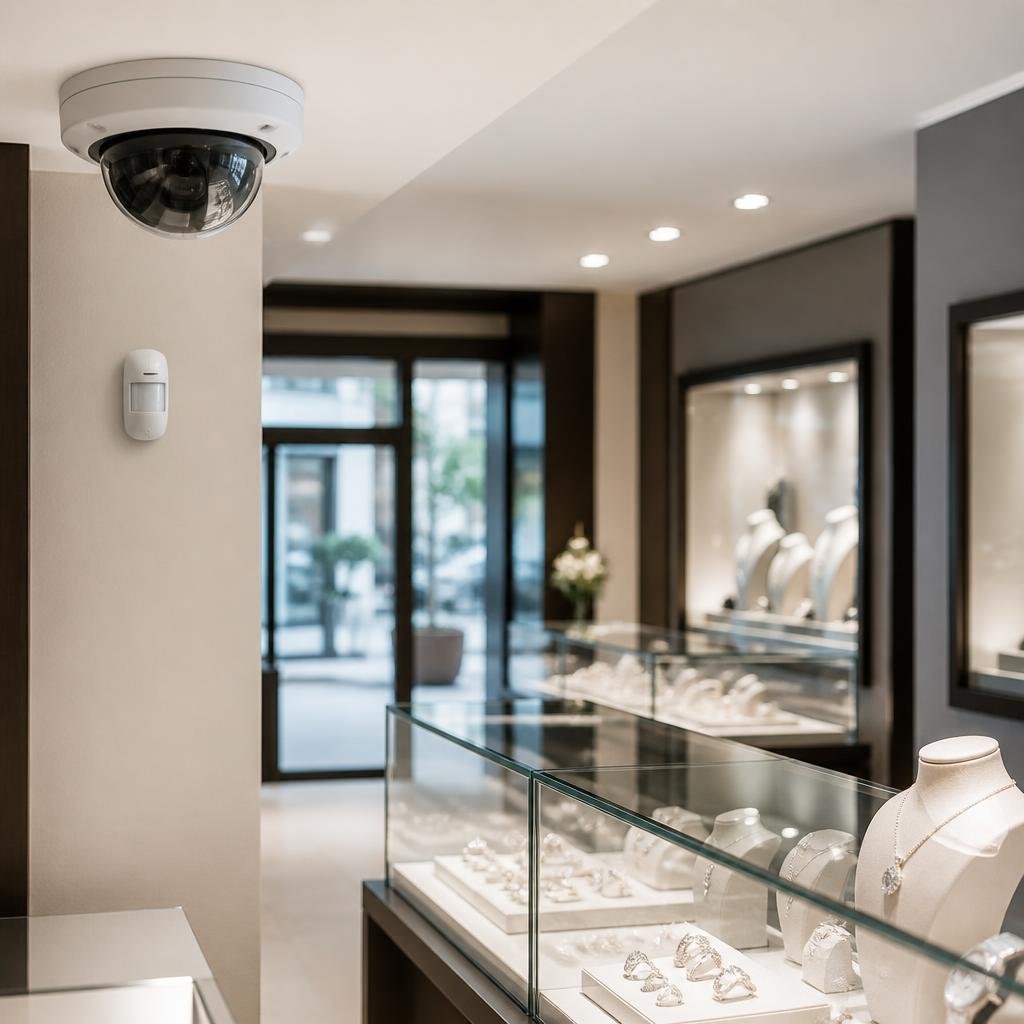
- Camera quality and type. High-resolution showcase cameras, PTZ cameras for large floors, and thermal cameras for perimeter and after-hours monitoring each carry different price points. For jewelry stores, cutting corners on camera quality is a mistake. Your cameras need to capture fine detail on small items.
- Access control complexity. A basic door sensor is inexpensive. Biometric security for your vault room and access and door entry systems with multi-zone credential management cost more but are justified for high-value inventory areas.
Call us at 847.353.7200 | Email us service@sentrysecurity.com
- Monitoring plan. Sentry Security’s professional monitoring is a monthly recurring cost. It is also the component that makes everything else functional. An unmonitored system is a camera that records what happened after you have already lost the merchandise.
- Wireless vs. hardwired. If your storefront requires wireless security systems, installation labor costs are lower. Hardwired systems cost more to install but may carry lower long-term hardware costs.
- Maintenance. Sentry Security’s maintenance and inspection services are an ongoing cost that most jewelers undervalue. A camera that goes offline unnoticed is a blind spot in your coverage.
What You Should Expect to Invest
Without publishing a price list that gets outdated, here is the honest range guidance: a properly protected single-location Illinois jewelry store should budget for a professional installation that includes cameras, intrusion detection, access control, monitoring, and a documented maintenance plan. Systems that cut corners on any of those components create gaps that cost far more to recover from than the savings up front.
The best starting point is a system design consultation with Sentry Security. They assess your specific space, risk profile, and compliance requirements before specifying a single piece of equipment.
The Cost of Not Investing
One smash-and-grab. One after-hours break-in. One internal theft event that goes undetected for months. The financial loss from any of those scenarios typically exceeds the total cost of a well-designed security system many times over.
See how Sentry Security protected C.D. Peacock and review additional case studies for real-world context on what proper jewelry store security looks like in Illinois.
Get a custom quote for your Illinois jewelry store.