
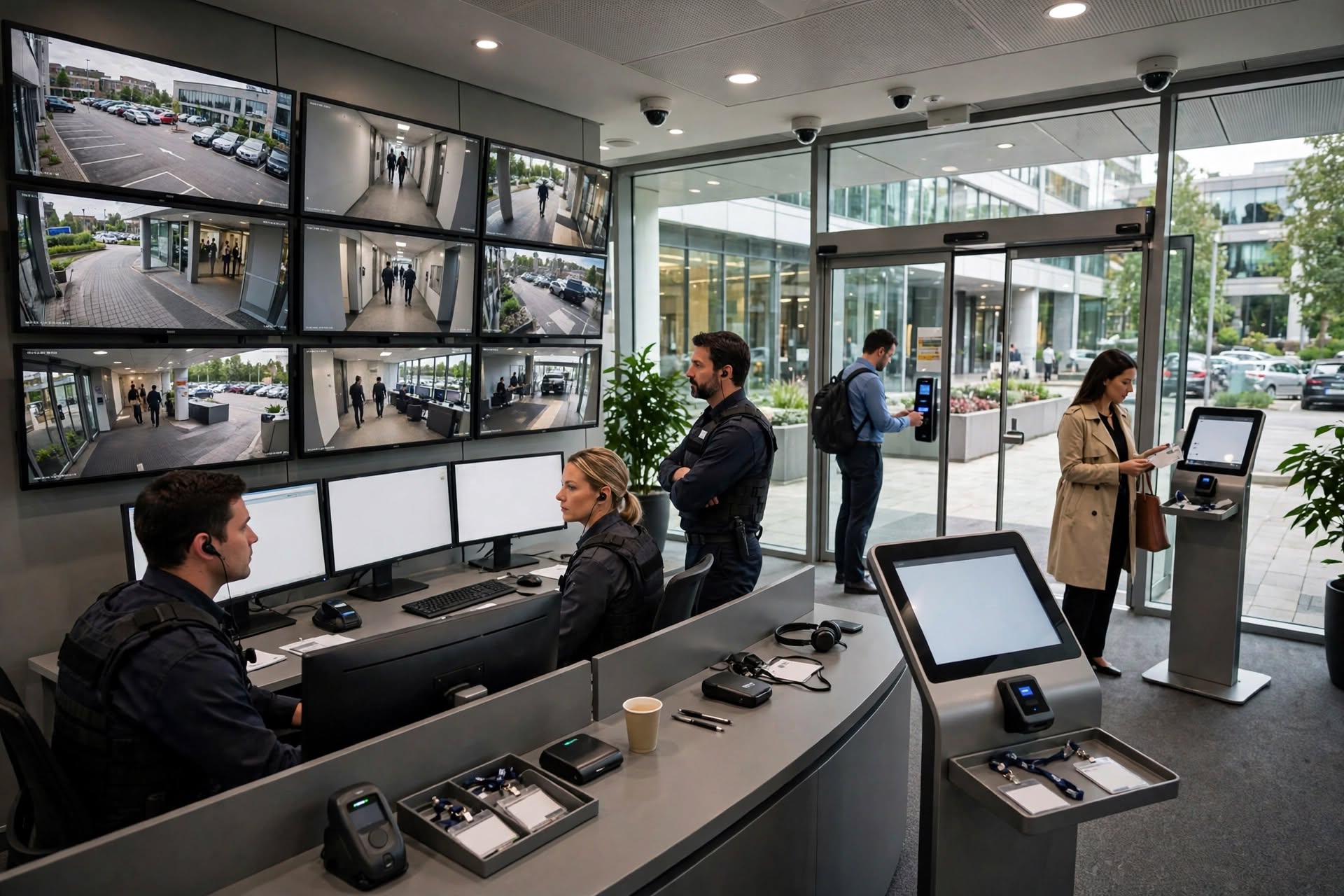
A business security plan should protect more than its building. Employees need safe working environments, visitors need controlled access, and valuable property needs appropriate protection. When these responsibilities are handled separately, important security gaps can develop.
A coordinated plan helps businesses manage people, access points, equipment, and potential incidents through a consistent approach.
1. Identify Who Needs Access and Where
Start by understanding who enters the property and what areas they need to access. Employees, contractors, delivery personnel, customers, and visitors may all have different access requirements.
For example, an office in Chicago may need separate access permissions for employees, reception areas, and restricted departments. A warehouse in Joliet may require additional controls around inventory storage, loading docks, and equipment areas.
Establish clear access rules and review them whenever employee responsibilities or building operations change.
2. Create a Consistent Visitor Management Process
Visitors should have a defined check-in process. Businesses can document visitor details, confirm the purpose of each visit, notify the appropriate employee, and maintain records of arrivals and departures.
Consider how reception teams, employees, and security personnel will coordinate visitor access. Sentry Security offers visitor management solutions to help commercial properties manage building entry more effectively.
847.353.7200Email Us : service@sentrysecurity.com – sales@sentrysecurity.com
3. Protect Buildings, Equipment, and Restricted Areas
Identify the assets that require additional protection. These may include inventory, sensitive records, machinery, IT rooms, cash-handling areas, and restricted storage spaces.

Depending on the property, protection may involve access control, intrusion detection, and strategically placed security cameras. Businesses in Naperville, Aurora, and Schaumburg should consider how these systems can work together rather than operate as disconnected devices.
Explore integrated security systems that bring relevant security technologies into a coordinated solution.
4. Establish Emergency and Incident Procedures
A security plan should explain what employees must do when an incident occurs. Define who receives alerts, who contacts emergency services, how employees report suspicious activity, and how visitors are accounted for during an emergency.
Businesses should also consider how alarm monitoring and emergency communication support their response procedures. Sentry Security provides security monitoring solutions for commercial properties.
5. Review and Update the Plan Regularly
Security requirements can change as businesses hire employees, renovate facilities, add equipment, or expand operations. Review access permissions, camera coverage, alarm procedures, and incident records periodically. Make sure employees understand their responsibilities and know where to report concerns.
Build a Coordinated Security Strategy
A practical business security plan connects employee safety, visitor management, property protection, and emergency response. Sentry Security helps commercial organizations across Illinois design and support security systems based on their facilities and operational needs.
Contact Sentry Security to discuss a coordinated security approach for your business.