
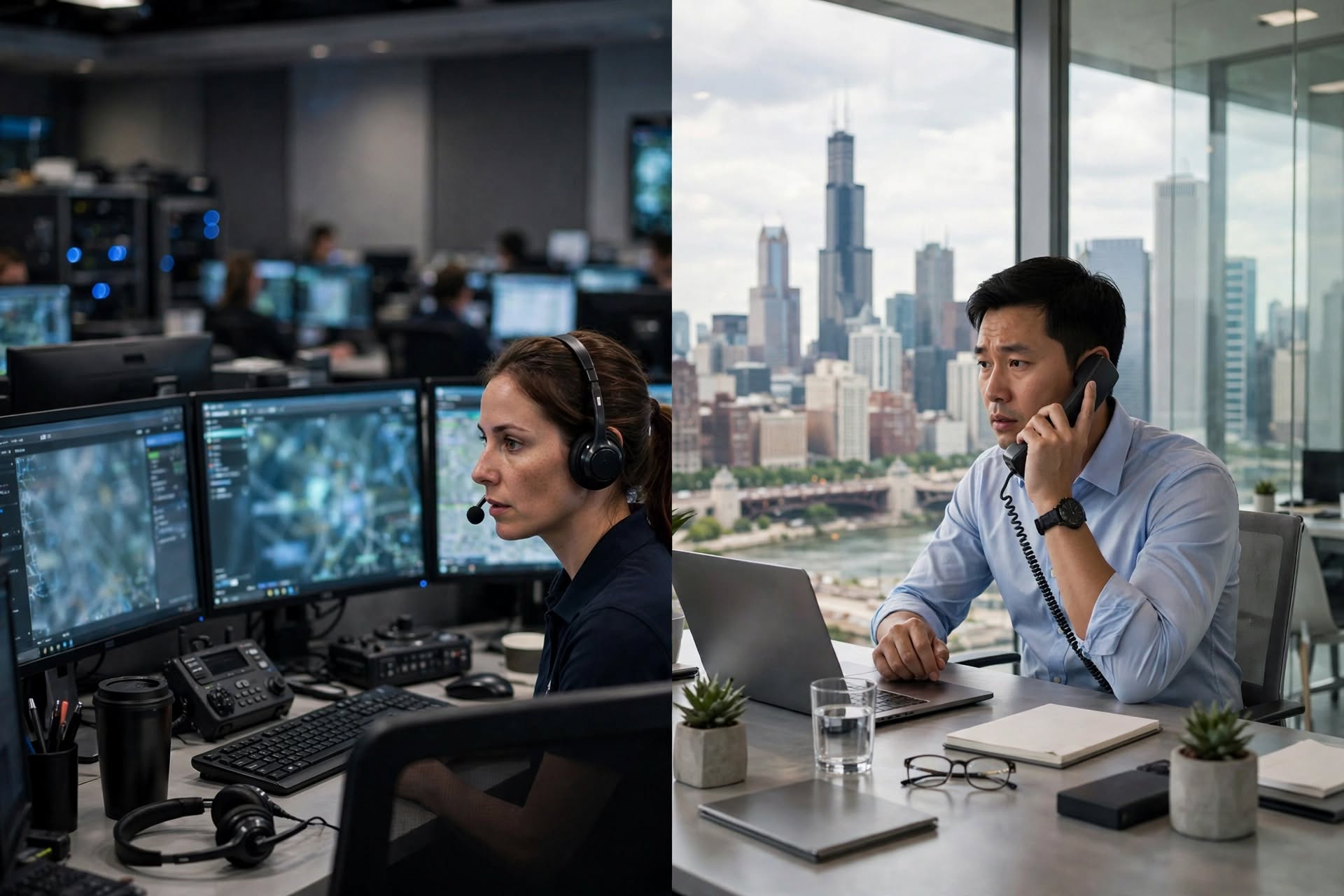
Emergency calling is an important part of business safety. Employees and visitors should be able to contact emergency services quickly and provide accurate location information when help is needed.
Quick answer: Businesses using multi-line telephone systems should review whether their emergency calling setup supports direct 911 dialing and provides the location information required under applicable rules.
What Is Kari’s Law?
Kari’s Law generally requires covered multi-line telephone systems to allow users to dial 911 directly, without first entering an outside-line prefix such as “9.” Covered systems must also support notification to designated personnel when a 911 call is made.
This requirement is particularly relevant to businesses using phone systems that require employees to dial an additional number before making an outside call.

What Is the RAY BAUM’S Act?
The RAY BAUM’S Act includes requirements intended to help emergency responders obtain a dispatchable location for emergency calls made through covered multi-line telephone systems.
Depending on the system and location, dispatchable information may include details such as:
- Street address
- Building number
- Floor
- Suite or room number
- Other information needed to identify the caller’s location
The specific requirements may depend on the type of service, system, property, and applicable federal rules.
How Can I Review My Business E911 Setup?
Businesses can begin by reviewing how employees make emergency calls and what information is transmitted to emergency services.
- Confirm whether employees can dial 911 directly.
- Check whether emergency calls notify designated personnel.
- Verify that business addresses are accurate.
- Review floor, suite, and room information where applicable.
- Update location details when offices or layouts change.
- Document emergency calling procedures for employees.
Businesses should coordinate with their telephone service provider and qualified compliance professionals to determine which requirements apply to their systems.
Can Security Technology Support Emergency Preparedness?
Although E911 compliance primarily involves emergency calling systems, integrated security technology can support broader emergency preparedness.
Solutions such as integrated security systems, access control, video surveillance, and monitoring can help authorized personnel understand activity at a property during an incident.
Sentry Security can also help businesses review their existing security infrastructure and coordinate improvements through system design and engineering.
Who Can Help My Business Review Its Security and Emergency Systems?
E911 requirements and security needs can vary based on the building, communication system, business operations, and applicable regulations.
Businesses in Chicago and throughout Illinois should work with their telephone provider and appropriate professionals to review emergency calling requirements. Sentry Security can assist with related security infrastructure, system integration, and ongoing service support.