
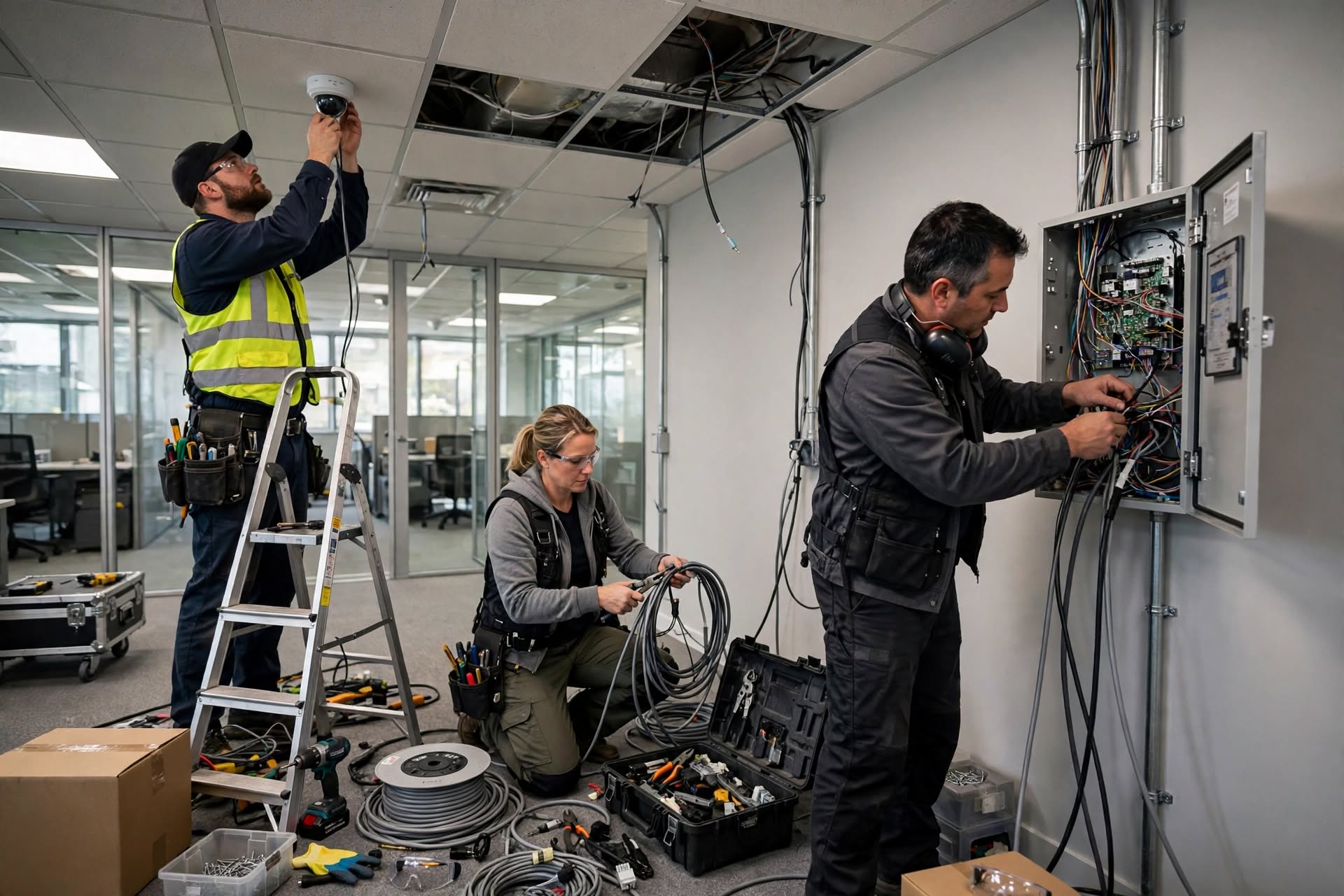
Installing a commercial security system involves more than mounting cameras or connecting an alarm panel. Businesses need a solution that fits their building, daily operations, and security priorities. Understanding the installation process helps owners and facility managers prepare their teams, reduce disruption, and make better decisions before work begins.
1. Begin with a Site Assessment
The process typically starts with a review of the property. A security professional evaluates entrances, employee areas, loading zones, parking areas, restricted spaces, and other locations that may require protection.
A facility in Chicago may have different requirements from a warehouse in Joliet or an office building in Naperville. The building layout, operating hours, existing equipment, and potential security risks all influence the system design.
2. Develop a System Design Around the Building
After the assessment, the next step is determining which technologies should work together. Depending on the property’s needs, the design may include video surveillance, intrusion detection, access control, and other security components.
Businesses should also discuss whether existing equipment can be integrated into the new solution. Reusing compatible infrastructure may help avoid unnecessary replacements. Sentry Security provides system design and engineering to help develop solutions around specific facility requirements.
847.353.7200Email Us : service@sentrysecurity.com – sales@sentrysecurity.com
3. Coordinate Installation with Business Operations
Installation work may involve wiring, equipment mounting, network coordination, access to restricted areas, and scheduled testing. Businesses should identify installation windows, notify employees, and coordinate with property managers or IT teams when necessary.
For active facilities in Aurora, Schaumburg, and Springfield, careful scheduling can help limit interruptions to employees, customers, and daily operations.
4. Test the System Before Handover
Once equipment is installed, each component should be tested. This may include checking camera views, verifying access permissions, testing intrusion detection devices, and confirming communication with monitoring services when included.
Ask the installation provider to explain how alerts work, who receives notifications, and what steps employees should follow when an event occurs.
5. Review Training, Monitoring, and Ongoing Support
A system is only useful when the people responsible for it understand how to operate it. Employees and designated administrators should receive appropriate guidance on system access, basic controls, and escalation procedures.
Businesses should also understand available security monitoring, maintenance, and support arrangements before the project is considered complete.
Plan Your Commercial Security Installation
A well-planned installation gives businesses a security system designed around their actual operations instead of a collection of disconnected devices. Sentry Security works with commercial properties throughout Illinois to design, install, and support integrated security solutions.
Request a quote to discuss your property’s requirements.